How I Scaled a Neglected Authority Site to Over $60k+ in Revenue (in less than 8months)
📊 Project Snapshot:
Metric | Result |
|---|---|
Domain Rating (vanity I know) | DR 60 → DR 71 |
Average Organic Traffic Value | $330 → $25,000 |
Top 1-3 Positions | 4 → 600+ |
Content Published | 40 → 350+ SEO-optimized articles |
Peak Traffic | 60k+ monthly pageviews |
Revenue Generated | $50K+ (Affiliate) + $7.5K (Ad/CPA/YouTube) |
YouTube Channel | 30 videos + $2K affiliate commissions |
Backlinks Built | Dozens of DR70–90+ domains |
Tools Used | Ahrefs, My ChatGPT Custom GPT, Link Whisper, Kadence WP, Google sheets |
Site Monetization | Affiliate, CPA, Mediavine Ads, YouTube |
The Mission: Revive, Monetize, and Flip a Dead SEO Asset
When I acquired the site, it wasn’t just a random content play – it was a calculated move.
I purchased the domain for $5,500 from a friend because it had:
- A Domain Rating of 60
- Hundreds of high-authority backlinks from industry-leading publications. Think Forbes-level do-follow links
- Zero current traffic or monetization – which meant massive upside.

The goal was clear:
Turn this neglected domain into a high-performing SEO asset that generates affiliate revenue, drives authority, and becomes a case study we could replicate across future projects and client work.
My vision for the project:
- Create a new income stream through affiliate marketing and ad monetization
- Test advanced topical authority frameworks at scale (300+ articles)
- Document a full rebuild process from dead domain → SEO powerhouse
- Eventually flip or spin off the asset after consistent results
This wasn’t theory.
It was a live-fire SEO experiment – and I built everything from the ground up to make it a strategic success.
Site Cleanup & Technical Foundation (aka The Surgical Rebuild)
When I bought thesite.com, I didn’t just jump in and start publishing content. I treated it like a surgeon with a scalpel – not a hammer.
The first thing I did was audit the entire site, top to bottom.
Instead of doing this blindly, I exported:
- Every single URL from the site’s sitemap into a Google Sheet
- Ahrefs data for each page: backlinks, referring domains
- Search Console traffic for the past 3 months
Then I built a decision matrix.
Each URL got one of four options:
- Redirect
- Update/Rewrite
- Delete
- Leave As-Is
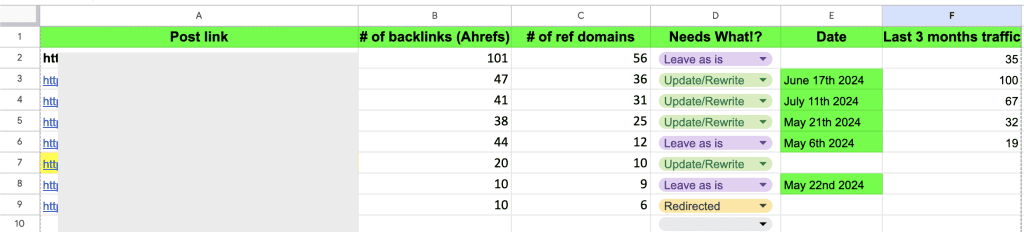
Pages that had strong backlinks (especially from DR70+ sites) but were outdated? I rewrote them.
Pages with traffic but poor content? Reworked and expanded.
Dead/thin/irrelevant pages with no links or traffic? Straight up deleted.
And where pages were missing but had juicy links pointing to them? I recreated them strategically to retain link equity.
I also made sure that every redirect was surgical – going to the most contextually relevant page or to the homepage as a last resort.
Internal Linking: Strategic, Not Random
I didn’t let new content sit in a silo.
I used Link Whisper to fix broken links and pages, identify internal linking opportunities from older, high-authority posts to my newer commercial pages – helping to funnel both SEO juice and user flow to key conversion pages.
Other Technical Improvements I Made:
- Theme Swap: Migrated the site from a bloated WordPress theme to the Kadence Theme. For faster speed, cleaner design, and better mobile UX.
- Hosting Upgrade: Moved to a premium, high-performance hosting solution to boost load time.
- Reusable Table of Contents: Added auto-injected TOC on all posts to improve UX and on-page SEO.
- Custom Post Templates: Created reusable templates for reviews, pricing pages, “best of” posts, and how-tos – each with strategic CTA placements and consistent tone.
- Affiliate CTA Placement: I included a key summary block immediately after the intro on every money post. It served both as a TL;DR and a conversion point.
- Metadata & Slug Optimization: Every URL, title tag, and meta description was manually crafted – no auto-generated nonsense.
This technical foundation gave me a clean, fast, and optimized canvas – ready for the real work: building topical authority and monetizing at scale.
Content Strategy & Keyword Execution
With the site’s technical foundation locked in, it was time to do what I do best – build topical dominance and monetize it.
I didn’t go in blindly. I spent two solid weeks on keyword research and content mapping. Like a mad man.
My Approach: Recursive Keyword Research + Topical Mapping
Most people dump a list of keywords from Ahrefs and start writing.
I do it a bit differently.
Here’s how I approach it, using a B2B SaaS example like a project management platform targeting small teams, agencies, and remote startups.
I’d start with a few obvious seed terms like:
- “project management”
- “project management tools”
- “best project management software”
- “asana vs monday”
- “tools for remote team collaboration”
Then I’d manually expand those using:
- Google Autocomplete
- “People Also Ask” questions and for info and commercial topics ideas (AlsoAsked tool)
- Related searches at the bottom of SERPs
- Ahrefs keyword gap reports
- Competitive SERP analysis
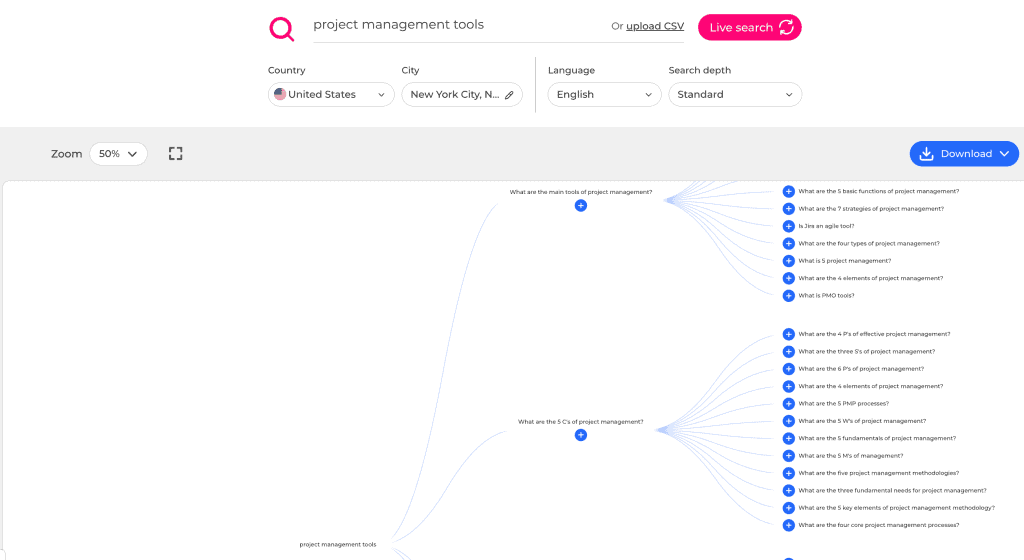
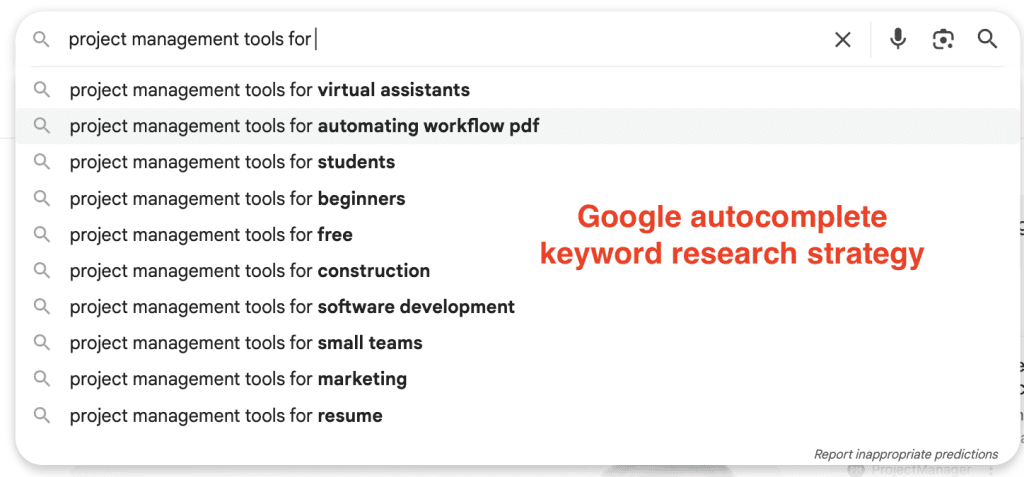

From there, I’d organize everything into intent-driven content clusters like:
- 🧩 Tool Comparisons: asana vs monday, clickup vs notion, trello vs airtable
- 💸 Pricing & Features: clickup pricing, best tools under $10/mo, free vs paid
- 🎯 Use Case Posts: project management for creative agencies, for startups, for dev teams
- 📍 Specific niche project management plaforms
- 📚 How-Tos & Templates: project tracking templates, how to manage sprint workflows
- ⚙️ Integrations: project management tools that work with Slack, Google Drive, Zoom, etc.
By the end, I’d have 300+ mapped keywords, every single one tied to:
- a real question your ICP is asking
- a commercial or strategic action
- a clear internal link path to your core feature or signup page
This structure makes the content easier to scale, rank, and monetize – because it’s not just about ranking. It’s about matching content to the exact pain points and workflows your customers are living with.
Systematizing Production with AI + Custom Workflows
At first, I used an AI writer to scale production.
But I quickly developed my own internal custom GPT system that outperformed it.
Every article was built using a custom briefing + templating system I created:
- Templates for: Reviews, “Best of” posts, Pricing breakdowns, vs. comparisons, and niche-based guides
- Strategic CTAs built-in from the intro
- Content structured for both SEO and LLM comprehension
Writers received full briefs. Editors worked off a defined checklist.
Internal Linking + Interconnected Topical Flow
After publishing, I plugged the content into Link Whisper, connecting related posts into tight topical loops. Plus, link my top commercial posts from the old/exsiting posts with links to power up the pages.
The goal:
- Increase crawl depth
- Pass authority from passive link bait content (like stats posts) to money pages
- Improve dwell time + pageviews/session
Affiliate Optimization Embedded from Day One
From the intro block, every article included:
- Key takeaway summaries
- Visual CTA buttons to affiliate offers
- Comparison tables using reusable blocks
- Occasional exit-intent popups – which surprisingly pulled a massive share of the affiliate revenue.

Authority Building & Backlink Growth
One of the biggest advantages of acquiring this domain was its existing backlink profile – but I knew better than to rely on what was already there.
I wanted to build on top of it, strategically.
Here’s how I did that.
Link Bait + Passive Authority Acquisition
I began publishing high-authority, data-driven articles that were designed to attract links from journalists, bloggers, and content marketers.
To make these posts link-worthy:
- I embedded custom graphics and charts (infographics, bar graphs, timelines)
- Added original commentary and interpretation to make it more than just data
- Used structured formatting and internal citations for credibility
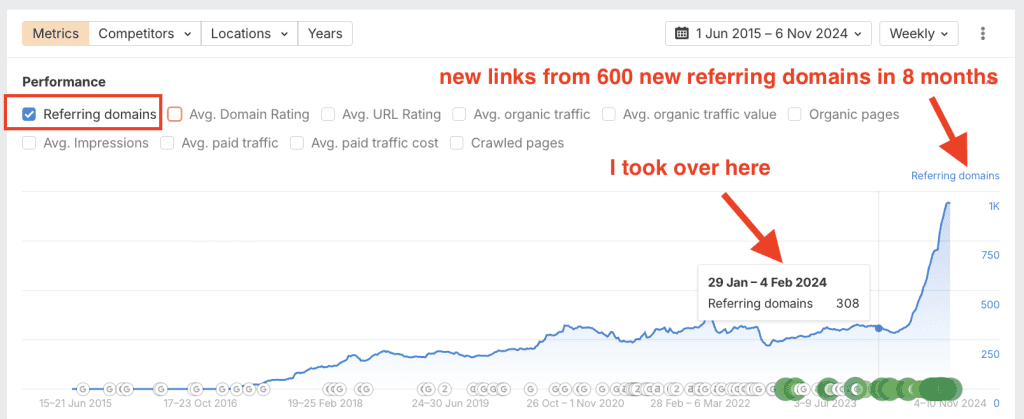
As a result, we began picking up natural backlinks from DR70 to DR90+ publications – without a single outreach email.
Guest Posts + Link Inserts (Surgical Outreach Only)
To accelerate authority growth:
- I invested in a small batch of premium guest posts
- Did selective link insert partnerships and exchanges with niche-relevant blogs
- Reached out to past sources linking to broken or outdated content, offering updated versions
- A bit of HARO
This gave us a balanced backlink profile – part earned, part negotiated, all white-hat.
See what the top referring domain report looks like for the last 6 months:

Tools + Tech I Used
- Ahrefs to analyze gaps and monitor link velocity
- HARO campaigns (outsourced) to score a few feature placements
- G Sheets SOPs to manage link sources, anchor texts, and linking targets
- Airtable for better tracking management for outreach manager
E-E-A-T Enhancements
While I didn’t build individual author bios for this project, I did:
- Rebuild the About page with transparent site ownership and a brand story
- Add policy pages, clear contact info, and legal disclaimers
- Used Rank Math schema defaults to markup all articles consistently
If I were to do it again, I’d double down on author pages + expert reviews for even stronger trust signals.
By the time traffic peaked, the site’s Domain Rating had grown from DR 60 to DR 71, and the link velocity was strong, stable, and clean.
The Monetization Layer
From day one, I built the site with monetization in mind.
Every post had a purpose and that purpose was either traffic, authority, or revenue.
I started tracking earning late, but here’s a sheet of a few months snapshot from the site – excluding a huge affiliate earning from a timely promo that happened a month before I started tracking:
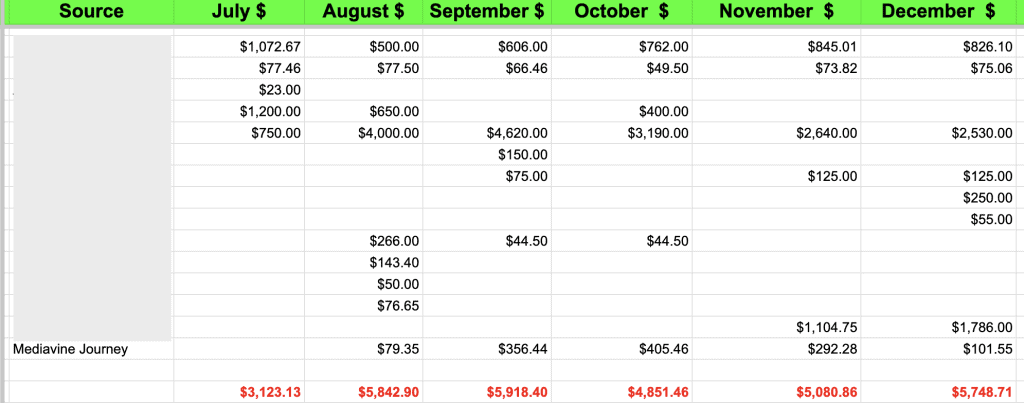
However, let me break down exactly how I monetized the site across four income streams so far.
1. Affiliate Revenue: $50,000+
This was the primary goal of the project – and it paid off.
I created money pages targeting high-intent keywords and designed them to convert from the first scroll:
- Added summary CTAs immediately after the intro
- Embedded buttons, tables, and custom blocks throughout each post
- Structured content to build trust before the first pitch
- Used exit-intent popups to capture abandoning visitors – which ended up driving thousands in extra affiliate earnings
Even on pages that weren’t directly commercial, I added contextual links back to conversion pages – creating a funnel-like experience without disrupting the reader.
2. Display Ads (Mediavine): $3,000+
Once traffic scaled, I brought the site into Mediavine Grow to earn passive revenue from informational content.
To make the most of it:
- I balanced commercial vs. informational posts
- Ensured ads didn’t interfere with affiliate CTAs ( I added a code provided by Grow to exclude ads from commercial pages)
- Optimized for scroll depth and session time to boost ad RPMs
The ads weren’t the main moneymaker – but they added a stable floor of revenue while the rest of the site scaled.
3. CPA Offers: $3,500+
During traffic peaks, I experimented with a high-paying CPA offer in a sub-niche tied to the site’s broader content categories.
With a well-placed banner and contextual CTA on just a handful of pages, the campaign pulled in over $3,500 – proving that even non-core content could be monetized smartly.
4. YouTube Channel: $2,000+ From Repurposed Content
To extend the brand’s reach, I launched a faceless YouTube channel tied to the site/niche.
I outsourced:
- Voiceovers
- Video editing
- Thumbnails
- Posting
All content was based on the blog’s existing keywords, turning written work into video assets that ranked on YouTube and drove affiliate clicks.
With just ~30 videos, the channel brought in a few thousand dollars (passively in a few months) in affiliate earnings and served as another validation channel for the site.
Results & Performance Metrics
After implementing the technical foundation, executing a tight content strategy, and layering in monetization – the site took off.
Here’s a breakdown of the real results from the project:
📊 Traffic Growth
The site climbed from virtually zero traffic at acquisition to a peak of 60,000 monthly pageviews – driven almost entirely by SEO.
| Metric | Peak Value |
|---|---|
| Monthly Pageviews | 60,000+ |
| Published Articles | 350+ |
| Ranking Timeline | 2–3 weeks for low comp, 2-3 months for main money pages |
Revenue Snapshot:
| Source | Revenue |
|---|---|
| Affiliate Programs | $50,000+ |
| Display Ads | $3,000+ |
| CPA Offer | $3,500 |
| YouTube (affiliate) | $2,000+ |
| Misc. Partnerships | $3,700 |
| Total | $62,200+ |
Authority Metrics
| Metric | Value |
|---|---|
| Domain Rating (Ahrefs) | DR 60 → DR 71 |
| Total Backlinks Acquired | 200+ new links |
| High-Authority Features | DR90+ publications via stats posts & HARO |
| Site Speed | ~1.1s load time (post-migration) |
| Core Web Vitals | All passed (green across metrics) |
Conversion Systems That Worked Best
- Intro summary boxes with affiliate CTAs
- Exit-intent popups that triggered based on scroll + intent
- Reusable comparison tables for commercial posts
- Soft CTA blocks on high-traffic informational pages
This wasn’t just a random surge – it was a structured build that turned into a predictable, profitable SEO system.
How I Help Brands Build Content Engines That Scale Traffic and Revenue
This project wasn’t just a win – it became the blueprint I now use to help other content sites, SaaS brands, affiliate businesses, and solopreneurs.
Here’s what I now bring to the table through my consulting practice:
1. Full-Scope SEO Audits (Not Just Technical Fixes)
Most audits are surface-level.
I provide surgical, layered audits based on real-world experience scaling and recovering high-authority sites.
I dig into:
- Crawlability + technical health
- Content structure + cannibalization
- Internal linking systems
- Topical authority gaps
- Monetization friction points
- E-E-A-T and AI visibility signals
2. Strategic Content Planning & Keyword Mapping
From zero to 300+ articles – I know how to:
- Build content clusters that rank and convert
- Map buyer intent to content types
- Use keyword recursion to uncover 3–5x more content opportunities than basic tools
Every post I plan has a purpose. Either traffic, authority, or revenue.
3. Monetization Optimization
Affiliate pages, ad layouts, CPA funnels, YouTube embeds, exit-intent popups – I’ve tested it all.
If you have traffic and aren’t monetizing it well, I can help fix that.
I’ll:
- Review your top pages
- Identify monetization friction
- Implement CTA placements and layout updates that convert
4. Authority Growth Systems
I’ve built DR71+ sites without PBNs or sketchy link buys.
Instead, I use:
- Link bait frameworks
- Reusable data content
- Targeted outreach + guest post campaigns
- Passive HARO-driven link acquisition systems
- Strategic PR campaigns to get cited by AI
5. Systems & Team Scaling (Without Burnout)
I’ve built SOPs for:
- Writers
- Editors
- Designers
- Uploaders
- Social/content VAs
- AI workflows
If you’re the bottleneck in your business, I’ll help build a system that runs without you.
6. AI + LLM SEO Integration
I now create content optimized not just for Google, but for LLMs like ChatGPT and Google’s Search Generative Experience (SGE).
This includes:
- Structured responses
- Semantic prompts
- Featured snippet formats
- Topical depth frameworks
Whether you’re starting from scratch, stuck at a plateau, or recovering from a hit , I’ve been there.
Want me to take a look at your business site?
If you’re serious about growing your traffic, building authority, and turning content into income — I’ll personally review your site and send you a free strategic audit.
No fluff. Just actionable insights, based on the exact system I used to scale this project to over $50,000 in revenue.